

“Surreal take on modern dating, sexuality and classical malay poetry.” – Sidney Chan via Instagram
“It was a simple but sweet and cute show!” – @thung_thung via Instagram
“Apa yang lebih pedih dan tajam ada pada setiap bait kata penyewa.” – Kandar Razak via FB
“Messages. Lessons. And the creativity I exceptionally enjoyed.” – @vivadram via Instagram
“This is classic Ridhwan Saidi and I liked it.” – @thenadcracker via Instagram
“With KongsiKL’s warehouse space, there’s an element of grunge to the set-up that fully encapsulates Teater Normcore’s ethos of unconventionality and ground-up theatre.” – Bakchormeeboy
Foto-foto ihsan KongsiKL:
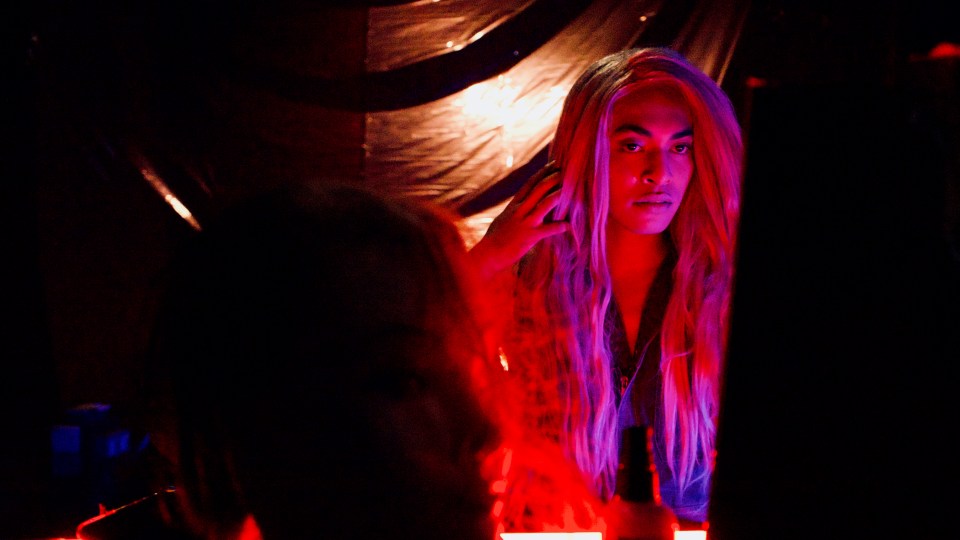
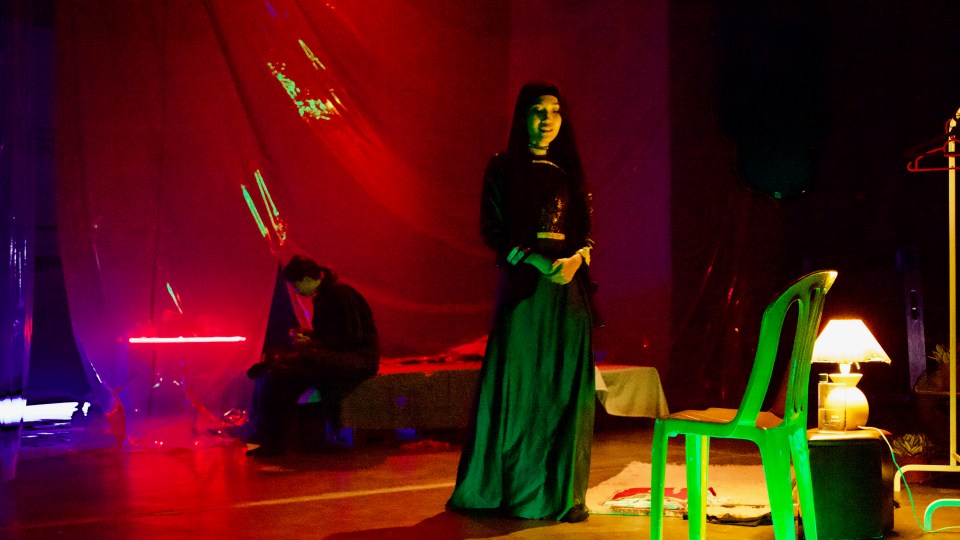
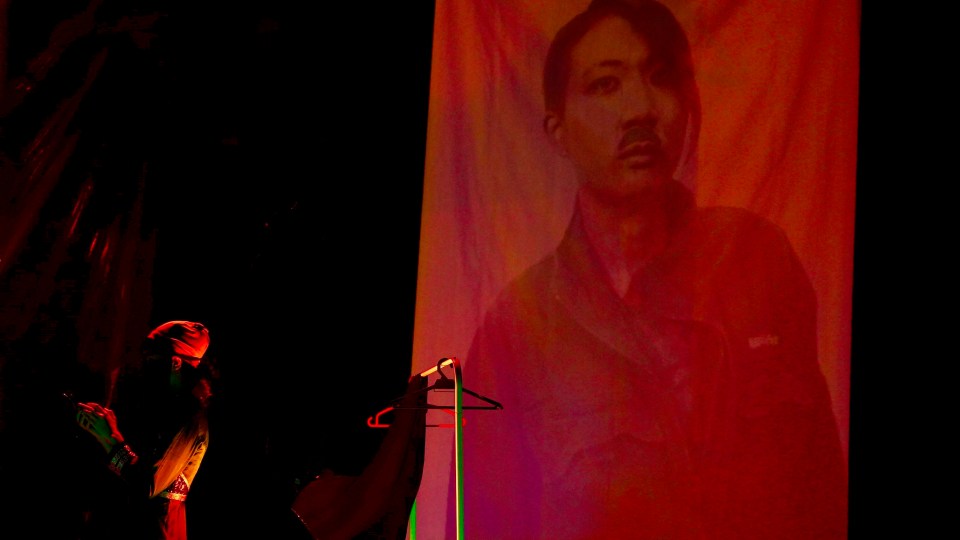
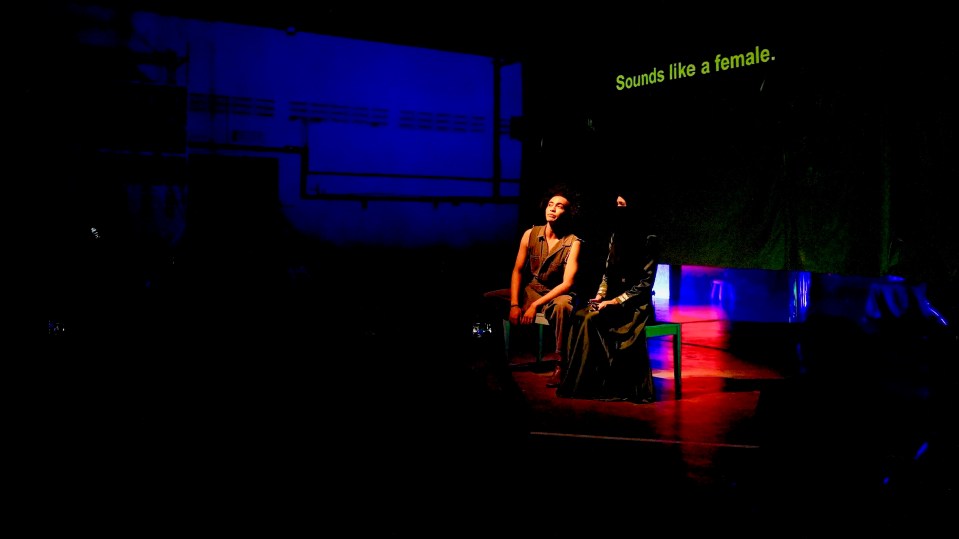
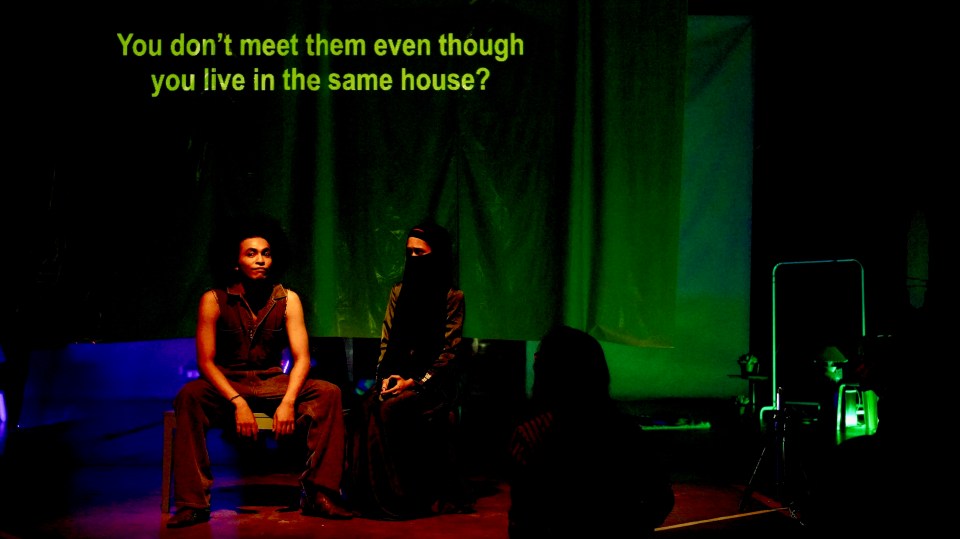
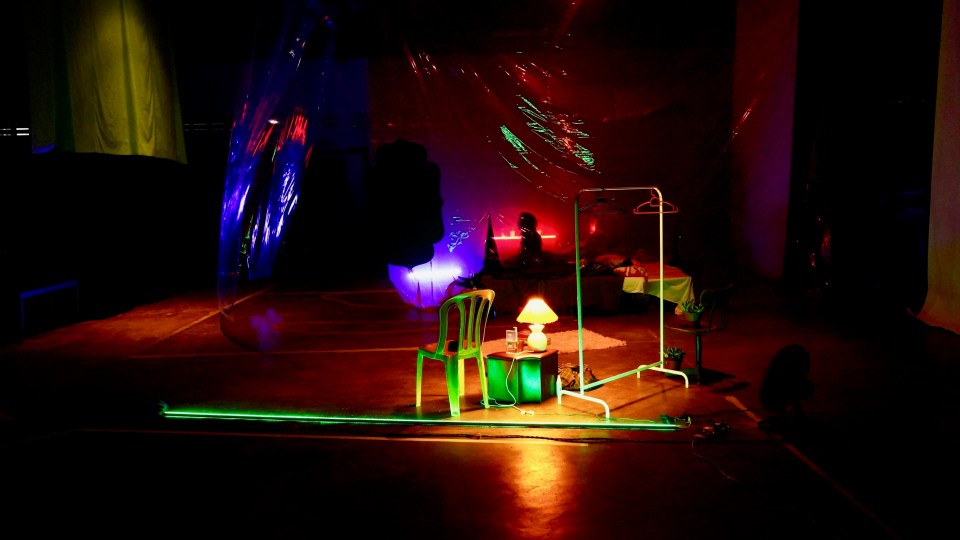
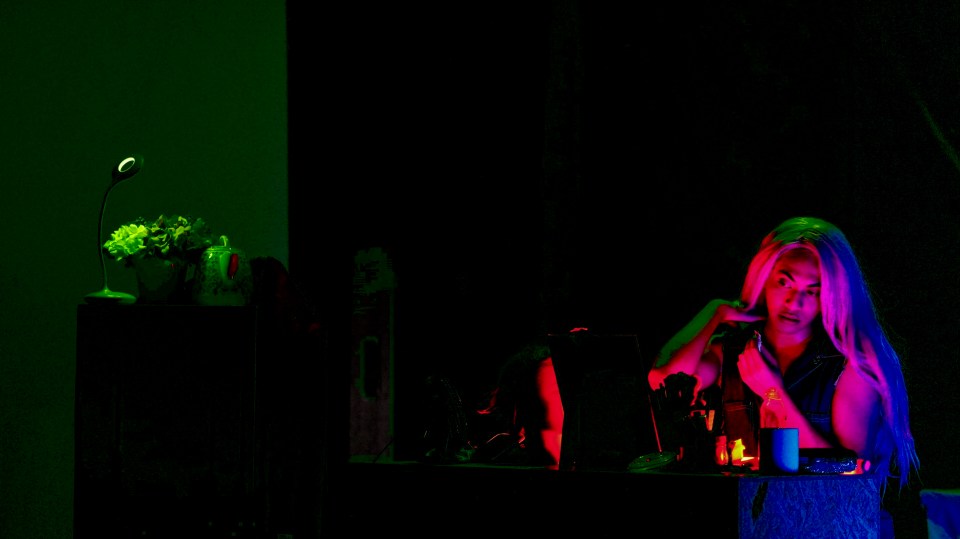
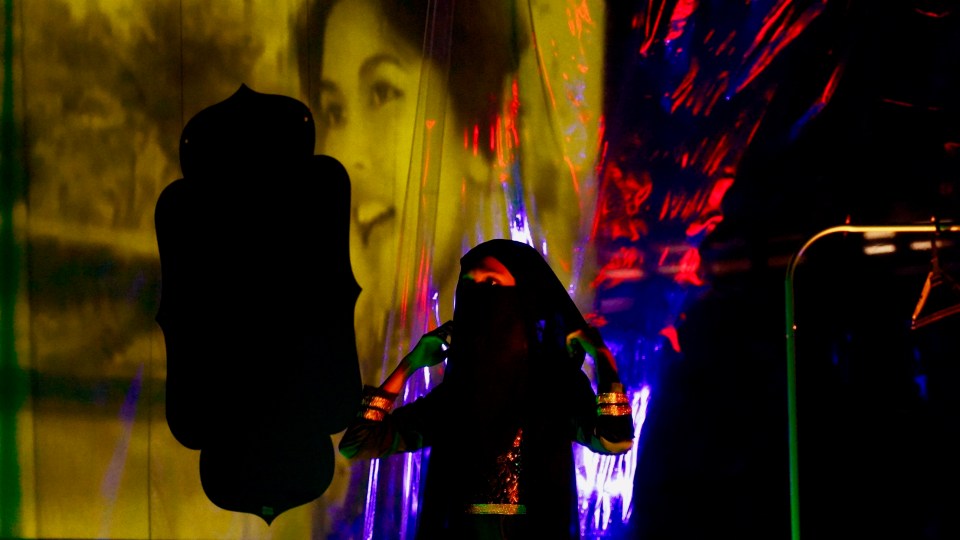
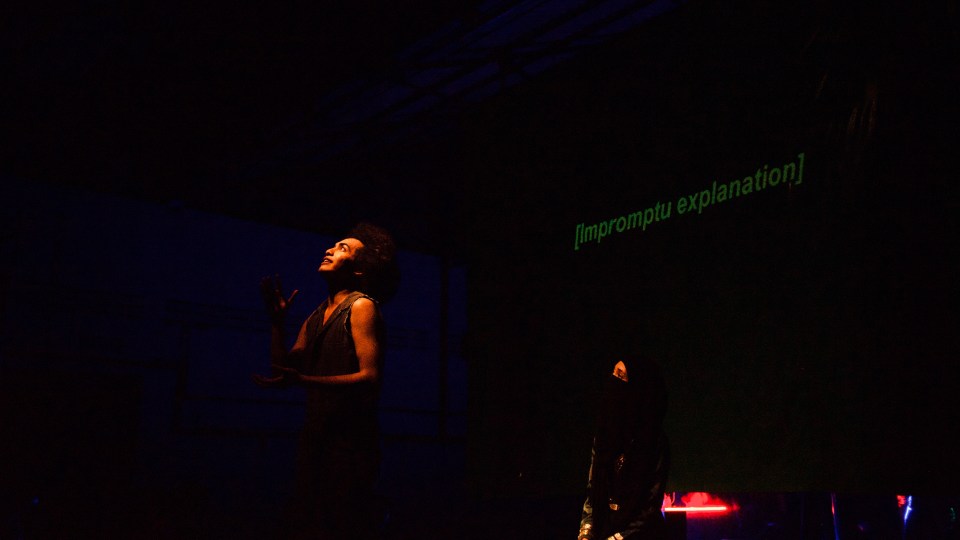
MASAM MANIS sebuah play tentang ruang peribadi dan ruang awam, hubungan kita dengan teknologi, dan lapisan persona yang kita hidupi. Diinspirasi filem Masam-Masam Manis (1965) oleh P. Ramlee, yang menangkap semangat kota Kuala Lumpur melalui sinema. MASAM MANIS tentang situasi kehidupan kita hari ini.
MASAM MANIS 《酸甜》 帶你遊走於公共與私人空間,穿梭於現代人與科技的關係以及我們在生活中層出不窮的表象。受 P Ramlee 在 Masam-Masam Manis (1965) 裡透過電影對當時吉隆坡的細膩捕捉所啟發,MASAM MANIS 將會呈現當今的社會面貌。
MASAM MANIS is a play about private and public spaces, our relationship with technology, and the multi-layered persona that we embody. Inspired by the film Masam-Masam Manis (1965) by P. Ramlee, that captures Kuala Lumpur nuances via cinema. MASAM MANIS is about our contemporary condition today.
Written & directed by Ridhwan Saidi
Performed by Sadiq M. Jamil, Mia Sabrina Mahadir & Lew Shu Ni
Duration: 70 minutes (performed in Malay with English surtitles.)
Scenography: Ilham Sani
Sound design: Joni Atari
Tech: Rashid Akhmal & Fariq Md. Khir
Producer: Nurul Aizam
Marketing & promotion: Tan Cher Kian & Tasha K.
Video documentation: Amirul Rahman
With support from the Hai-O Arts & Culture Grants
Venue: KongsiKL, Old Klang Road
Date: 12 – 15 March 2020
Time: 8.30 pm
Pas masuk: RM30 (early bird, ends 31 Jan 2020) / RM40 (normal)
FB event page: Teater Normcore: Masam Manis
The first TEATER NORMCORE play titled ’Stereo Genmai’ was staged in October 2018 at KOTAK@Five Arts Centre, followed by ‘Hamlet Fansuri’ at PortCommune in August 2019, and a new direction for ‘Stereo Genmai’ at The Godown for Urbanscapes in November 2019. ‘Masam Manis’ will be the third play in the series.
TEATER NORMCORE 系列之首《玄米立體聲》2018年八月在 KOTAK @ Five Arts Centre 首演,2019年十一月重新改編後在 The Godown 的 Urbanscape 二度上演。繼 2019年八月在 Port Commune 上演的 《哈姆雷特方素里》,MASAM MANIS 《酸甜》將會是系列的第三部作品。
Play pertama TEATER NORMCORE berjudul ‘Stereo Genmai’ telah dipentaskan pada Oktober 2018 di KOTAK@Five Arts Centre, diikuti ‘Hamlet Fansuri’ di PortCommune pada Ogos 2019, dan olahan baharu ‘Stereo Genmai’ di The Godown untuk Urbanscapes pada November 2019. ‘Masam Manis’ akan menjadi play ketiga di dalam siri ini.
PRESS:
Breaking Down Bittersweet Barriers. By Aref Omar. News Straits Times, 11 Mar 2020. https://www.nst.com.my/lifestyle/groove/2020/03/573606/showbiz-breaking-down-bittersweet-barriers
How To Tell Stories That Live In People’s Memories? An interview with Ridhwan Saidi by Sukhbir Cheema. Eksentrika, 13 Mar 2020. https://eksentrika.com/ridhwan-saidi/
Masam, Manis and the Things in Between. Presented by Sharmilla Ganesan. The Bigger Picture, Front Row, 10 Mar 2020. Ridhwan Saidi, playwright/director | Sadiq M. Jamil, actor | Lew Shu Ni, actor. https://www.bfm.my/podcast/the-bigger-picture/front-row/fr-masam-manis-between
Masam Manis Aifm radio interview. Host Essel Yap En She. Guest CK and Mia Sabrina. Aifm radio, 27 Feb 2020. video 1 and video 2 link here.
New Play ‘Masam Manis’ explores bittersweet conundrum of private and public personas in conservative Malaysia. Melanie Chalil. The Malay Mail, 10 Feb 2020. https://www.malaymail.com/news/life/2020/02/10/new-play-masam-manis-explores-bittersweet-conundrum-of-private-and-public-p/1836111
POST PERFORMANCE REFLECTIONS
Teater Normcore: Masam Manis took place as scheduled on 12–15 March 2020. These were the final days before the Restricted Movement Order (RMO) was enforced in response to the COVID-19 outbreak. On our side, as makers, we placed soap at the sinks in KongsiKL and provided hand sanitizer. The 10,000-square-foot warehouse also allowed the audience to keep a safe distance. No seats were assigned. For this performance, audiences were free to sit or stand wherever they felt comfortable. We also encouraged those at the edges to move around to catch the action unfolding in both rooms. I will share more about this below. / Pementasan Teater Normcore: Masam Manis berlangsung seperti yang dijadualkan iaitu pada 12-15 Mac 2020. Ia merupakan hari-hari terakhir sebelum RMO (restricted movement order) dijalankan dalam mendepani wabak COVID-19. Di pihak pembikin kami membekalkan sabun di sinki KongsiKL, selain menyediakan hand sanitizer. Gudang KongsiKL seluas 10,000 kaki persegi ini juga membolehkan audiens untuk jaga jarak selamat. Tiada tempat duduk khas ditetapkan, sebaliknya untuk pementasan ini audiens bebas untuk duduk atau berdiri, di mana-mana yang mereka rasa selesa. Kami juga mengesyorkan agar audiens yang berada di tepi, sentiasa boleh bergerak untuk melihat aksi yang berlaku di kedua-dua buah bilik. Ini akan saya ceritakan dengan lebih lanjut di bawah.
For the first time in making theatre, we felt that safety mattered more than a large audience. There was a mix of worry and excitement. This feeling had already seeped into the rehearsal process. Normally in theatre, physical contact is part of the culture—hugs or handshakes when we meet for practice—but in this situation, we began with fist bumps, which eventually turned into waves. Physical contact diminished even though we met often. This made me wonder whether ensemble unity would weaken without these small gestures, and whether something else should replace them. We had an intensive discussion about what acting means, which we recorded and transcribed. We also shared meals and conversations together, which at the very least allowed a sense of camaraderie to take root and align our spirits. / Buat pertama kali dalam proses menghasilkan teater, kami merasakan keselamatan lebih utama daripada keramaian audiens. Ada rasa risau bercampur gemuruh. Perasaan ini malah sudah terbawa sejak proses rehearsal. Menjadi kelaziman di dalam teater untuk ada sentuhan fizikal baik berpelukan atau bersalaman ketika kami bertemu untuk latihan, tetapi dalam situasi ini, pada awalnya kami fist bump, tetapi lama-kelamaan ia bertukar menjadi lambaian. Sentuhan fizikal semakin berkurangan, meski kami selalu bertemu. Ini membuat saya terfikir jika semangat kesatuan ensembel akan menjadi lemah tanpa gesture-gesture kecil ini, lalu saya fikir perlu ada situasi lain yang jadi pengganti. Kami buat satu perbincangan intens tentang apa itu lakonan untuk ia dirakam dan ditranskrip. Selain itu ada juga sesi makan dan sembang bersama, yang sekurangkurangnya beri peluang untuk semangat kebersamaan diterap, dalam mendapat kesatuan hati budi.
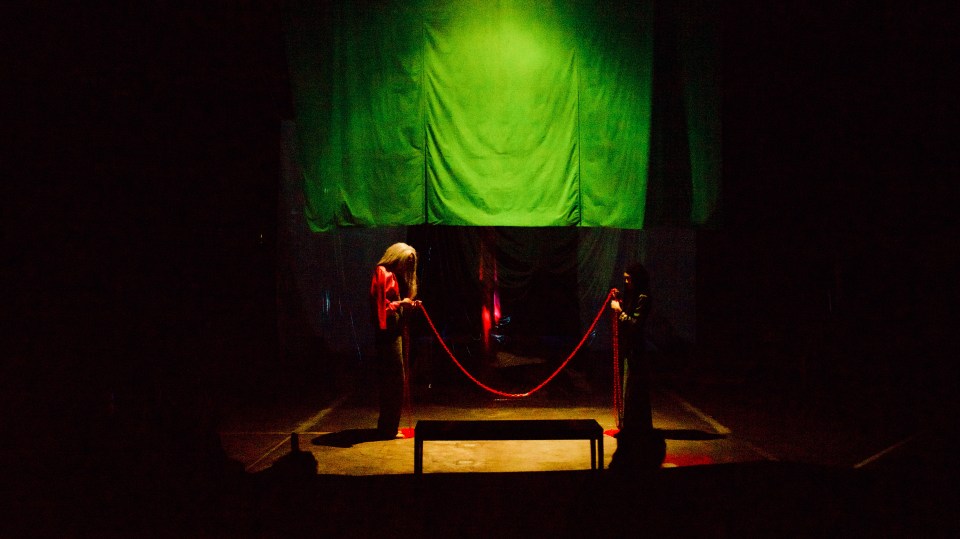
Rehearsals began in several locations but the work started to take its final shape at PKAF (Centre for Film Studies & Appreciation), Alam Budiman. What we practiced in a small, dark room had to be recalibrated in the actual venue. The acoustics and atmosphere of a room were not the same as in a warehouse. In addition to the three actors—Sadiq M. Jamil, Mia Sabrina Mahadir, and Lew Shu Ni—those working behind the scenes included Nurul Aizam, Rashid Akhmal, Amirul Rahman, Tan Cher Kian, Tasha K, and Farid Khir. Together, we set up the performance space. Our set designer, Ilham Sani, works with the philosophy that scenography should be sustainable, lightweight, and minimal. In this case, different kinds of plastic and paper were used to create partition sheets. Sustainability meant that the red paper and plastic used in this play had already been used in earlier productions. The green and transparent sheets of plastic were newly purchased, but they will be reused in future productions. These materials were light and could be rolled up for storage. Waste was minimized in pursuit of zero-waste theatre. / Proses latihan dijalankan di beberapa lokasi pada awalnya tetapi mula mendapat bentuk akhir sewaktu di PKAF (Pusat Kajian & Apresiasi Filem), Alam Budiman. Latihan yang berjalan di dalam ruang kecil dan gelap ini, perlu di-calibrate semula sewaktu di lokasi sebenar. Akustik dan semangat ruang sebuah bilik tidak sama seperti di gudang. Selain tiga orang aktor iaitu Sadiq M. Jamil, Mia Sabrina Mahadir dan Lew Shu Ni, mereka yang terlibat di belakang tabir termasuk Nurul Aizam, Rashid Akhmal, Amirul Rahman, Tan Cher Kian dan Tasha K serta Farid Khir. Kami bersama-sama memasang set di lokasi. Menjadi falsafah Ilham Sani iaitu pereka set kami bahawa sinografi teater perlu sustainable, lightweight dan minimal. Dalam kes ini, beberapa jenis plastik dan kertas digunakan dalam membuat helaian pemisah. Ia sustainable dalam erti kata, kertas dan plastik merah yang digunakan dalam play ini, pernah digunakan di dalam pementasan terdahulu. Helaian plastik hijau dan transparen yang baru dibeli, dan ia bakal digunakan di dalam pementasan-pementasan akan datang. Helaian-helaian kertas dan plastik ini ringan dan boleh digulung untuk disimpan. Sampah diminimakan dalam menuju ke arah produksi teater zero waste.
The set consisted of two rooms, which allowed the audience to experience theatre in two different ways. First, they could sit in the middle area and observe both rooms, giving them a macro view. Or, they could commit to one room, creating a more intimate and close encounter, like experiencing an exhibition in a gallery. They could choose to enter the room of Mar on the left, or Hanim on the right. Audiences were also free to move actively from room to room, shifting perspectives. / Set yang terdiri dari dua bilik ini, membolehkan audiens mengalami dua pengalaman teater yang berbeza. Yang pertama mereka boleh pilih untuk duduk di kawasan tengah, dan perhatikan kedua-dua bilik. Situasi ini membolehkan mereka menyaksikan teater secara makro. Pilihan kedua pula, audiens boleh pilih untuk commit dengan salah satu bilik, lebih intim dan dekat, yang mana perasaannya lebih mendekati melihat pameran di galeri. Audiens boleh pilih untuk mendekati bilik watak Mar di belah kiri, atau bilik watak Hanim di belah kanan. Audiens juga boleh ubah posisi mereka bergerak secara aktif dari bilik ke bilik untuk merasa perspektif berbeza.
Alongside the performance, we printed a zine of the script for audiences to buy and read. This offered a glimpse into how a text transforms into a performance. / Selain pengalaman teater, kami turut cetak zine skrip untuk dibeli dan dibaca audiens. Ini sedikit sebanyak dapat mendedahkan proses bagaimana dari teks ia berubah bentuk menjadi performance.
Across the four days, 113 people attended, with varying numbers each night. At times the audience was under 20, at times under 30, and at times around 50. Each number created a different mood. When more people attended, movement was limited, so the audience became more passive. But when fewer attended, some moved freely from room to room. I saw this movement itself as a kind of performance, a choreography of random audience gestures. It gave colour to the experience of theatre, unlike the rigid seating of a proscenium stage or conventional auditorium. For this work, I drew from the spirit of traditional forms such as wayang kulit, mek mulung, and mendu, which unfold in open spaces and carry a more relaxed, spontaneous atmosphere. In our theatre, the audience can always move around, since the space is not fixed with seats. / 113 audiens datang ke empat hari pementasan kami dengan jumlah yang berbeza-beza pada setiap malam. Ada waktu audiens kami di bawah 20 orang, ada waktu di bawah 30 orang dan ada waktu dalam 50 orang. Ia memberikan perasaan yang berbeza. Misalnya ketika ramai audiens hadir, gerakan audiens lebih pasif kerana tiada banyak ruang membolehkan audiens untuk bergerak. Sebaliknya apabila tidak ramai yang hadir, ada audiens yang aktif bergerak dari bilik ke bilik, dan ini menurut saya merupakan suatu performance juga, gerakan rawak audiens. Ia memberi warna terhadap perasaan berteater yang tidak hanya buat audiens yang duduk rigid seperti di pentas proscenium atau auditorium kebiasaan. Malah untuk teater ini saya mengambil semangat teater tradisional seperti wayang kulit, mek mulung, mendu dan seumpamanya yang berlaku di tempat terbuka, yang lebih santai dan spontan sifatnya. Audiens sentiasa boleh bergerak dalam teater-teater bikinan kami kerana ia bukan ruang dengan kerusi tetap.
The use of everyday materials like paper and plastic also reflected and refracted light. Since the venue had no special lighting—only basic switches on the walls—the set design indirectly created layers of visual texture. There were solid, transparent, and translucent surfaces. Perspective shifted depending on where one stood or sat. Standing offered a different experience from sitting on a chair, and sitting on a chair differed from sitting on the floor. Distance also mattered. Theatre is a live, deeply personal encounter, unlike the proscenium stage where images are arranged for the audience to view from afar. Teater Normcore: Masam Manis invited audiences to zoom in and zoom out, to immerse themselves in the intimacy of a room or to step back and observe from a distance. Each experience was unique to each person. / Penggunaan objek seharian seperti kertas dan plastik juga memantul dan membiaskan cahaya. Oleh kerana ruang ini tiada lampu istimewa, yang ada cuma lampu-lampu asas yang dikawal pada suis dinding, rekaan set secara tidak langsung memberikan lapisan-lapisan visual yang indah. Ada lapisan solid, transparent, dan translucent. Perspektif berubah untuk setiap posisi yang dipilih. Melihat secara berdiri berbeza pengalamannya berbanding melihat secara duduk di kerusi, dan duduk di kerusi berbeza dengan duduk di atas lantai. Jarak juga main peranan. Teater adalah pengalaman langsung yang amat peribadi. Tidak seperti teater proscenium di mana audiens melihat susunan imej dari jauh. Teater Normcore: Masam Manis menawarkan audiens untuk zoom in dan zoom out, untuk immerse ke dalam kisah di dalam bilik atau menjarakkan diri untuk perhati dari jauh. Setiap pengalaman unik untuk diri masing-masing.
Ridhwan Saidi // 2020
 Moka Mocha Ink